
The Schoolyard Greenprint
| Program | Research partnerships |
|---|---|
| Location | Canberra, ACT |
| Country | Ngunnawal Country |
| Volumes | Four |
| Research team | Health Research Institute, University of Canberra |
| Funding | Frontiers, developed by Hort Innovation, with co-investment from the Landscape Foundation of Australia and contributions from the Australian Government |
| Awards | Award for Excellence — 2026 AILA ACT Awards (Research, Policy and Communications category) |
| Published | July 2026 |
| Licence | © University of Canberra |
Award for Excellence — 2026 AILA ACT Awards
The Schoolyard Greenprint project has won the 2026 AILA ACT Award for Excellence in the Research, Policy and Communications category, announced on 17 September 2026. The project — a national guide to designing school grounds for student wellbeing — was developed by the Health Research Institute at the University of Canberra, in partnership with the Landscape Foundation of Australia.
Summary
For most young people, the move from primary to secondary school brings new campuses, peers and routines. Less often acknowledged is the shift from the playground to the playing field — a change that reshapes how students find their place, manage their emotions and connect with others.
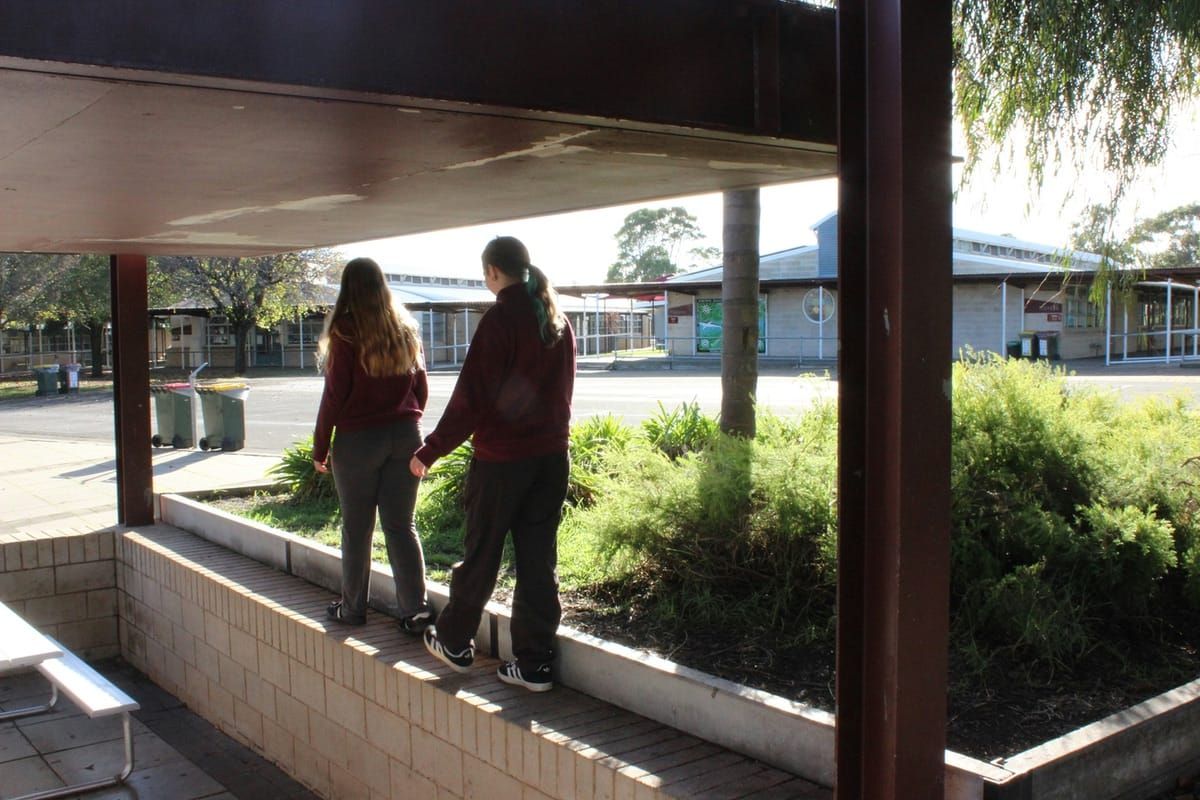
The Schoolyard Greenprint reframes high school outdoor spaces as critical settings for wellbeing and belonging. It draws on two years of engagement with school leaders, students, advocates, designers and community members across Australia, and is grounded in student voice. A group of five young adults — the Greenprint Youth Voices — shaped the work throughout, testing findings against their own and other students' experience.
For designers and school executives, its practical value is a shared design language: a way to understand what students need from outdoor space, and how design decisions support or undermine it. The Landscape Foundation of Australia co-invested in the research, and LFA directors contributed to the project.
The four volumes
- Volume 1 — Overview. The role and impact of outdoor spaces on student health and wellbeing, and how the four volumes work together.
- Volume 2 — Typologies. Campuses categorised by landscape layout, showing how spatial design shapes student activity, social interaction and connection to nature, and how each type can move towards a greener, more supportive campus.
- Volume 3 — Design guide. An evidence-based framework organised around six aspects of wellbeing — physical, emotional, psychological, cognitive, social and cultural — with design guidelines and practical solutions for each.
- Volume 4 — Engagement toolkit. Tools and templates for gathering data on schoolyards, including ways to engage students directly, and alternatives where that isn't possible.
Downloads
Download: Volume 2 — Typologies
Download: Volume 3 — Design guide
Download: Volume 4 — Engagement toolkit
Cite as
Leigh, Gweneth, Hannah Richardson, Claire Manning, Finlay Robinson, and Rachel Davey. “The Schoolyard Greenprint.” Four volumes. Health Research Institute, University of Canberra, 2026.